Commercial access-control technology is changing, but a useful plan still starts with the building, its users and the required door behavior. This 2026 reference describes developments worth evaluating and the proof an owner should request, without treating every new feature as a reason to replace serviceable equipment.
Encrypted credentials and reader communications
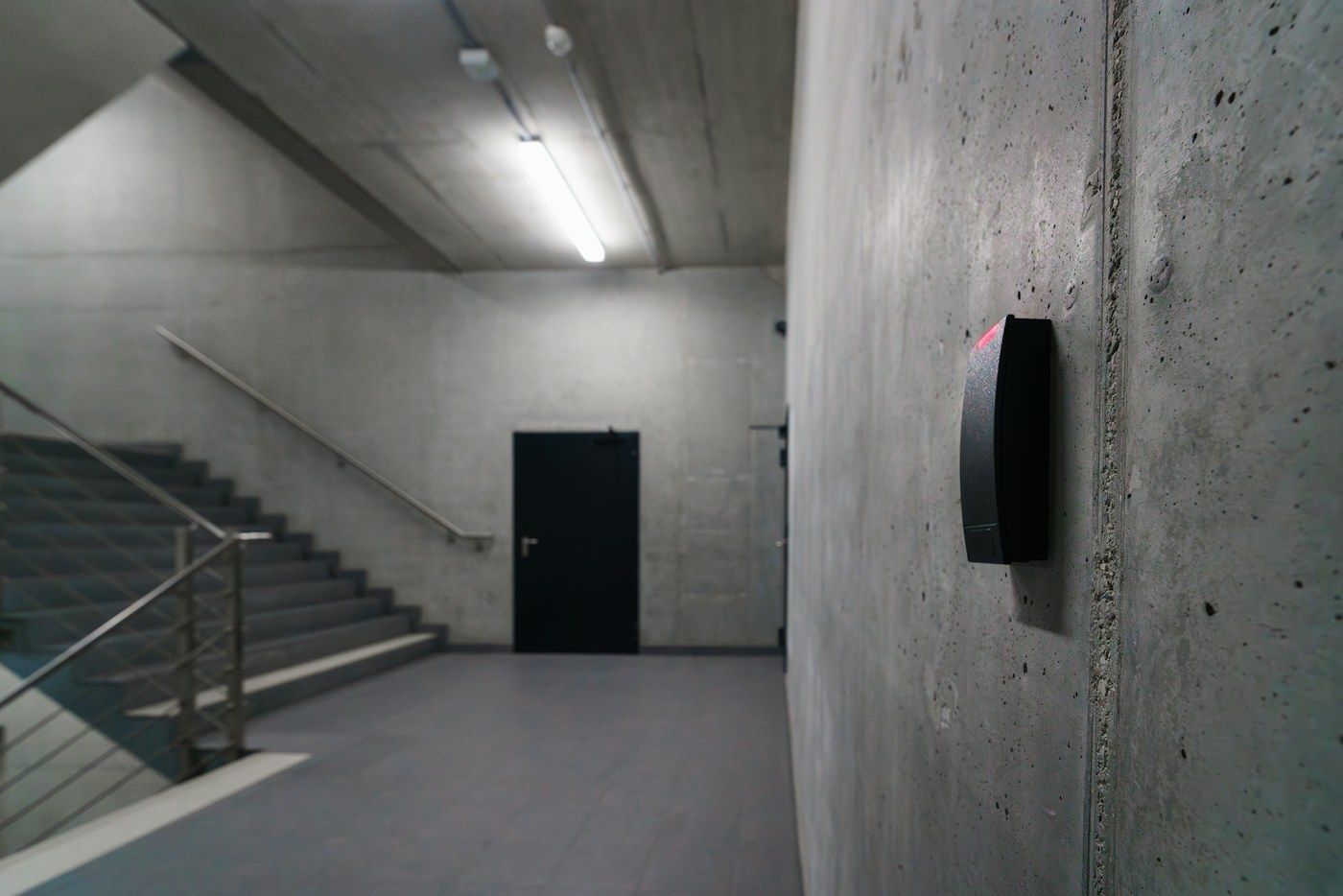
Legacy low-frequency proximity cards and Wiegand connections remain in many installed systems. Where warranted, evaluate secure credentials and supported OSDP Secure Channel to reduce cloning and reader-link exposure. Confirm the intended security mode, provisioning keys, firmware and tested controller compatibility. A 13.56 MHz label or “OSDP compatible” claim alone does not prove encryption.
Mobile credentials and wallets
Supported phones, wearables and wallets may replace some plastic cards. Evaluate enrollment, revocation, device loss, replacement, user accessibility, platform subscriptions and integration with organizational identity management. Emerging interoperability standards should be assessed against the actual reader hardware and released software rather than future product promises.
Cloud-managed, on-premises and hybrid systems
Management options differ in where data is kept, what happens without internet service, who performs updates and who owns administrative access. A hosted interface does not eliminate physical door infrastructure. Require separate failure tests for cloud, LAN, WAN, controller and power interruptions. An organization with well-managed local systems may not benefit from a cloud migration.
Identity and employment lifecycle integration
Supported platforms can synchronize selected user groups and permissions with corporate identity or HR systems. This may improve onboarding, transfers and offboarding, but role mapping, approval controls, service accounts and timely revocation must be tested. Do not automate unrestricted access from an incomplete personnel record.
Video and intrusion coordination
Access events may be associated with nearby cameras or intrusion events. The value comes from useful views, time synchronization, accurate door names and a defined operator response. AI analytics may help search video or classify activity, but false positives, missed detections, privacy and lighting conditions still matter. A software label must not independently change required life-safety door behavior.
Wireless locks and decentralized hardware
Wireless locks can reduce cable work on some interior openings. Include battery maintenance, gateway coverage, event retrieval, permission latency, mechanical override and fire-door suitability. New IP controllers may simplify wiring in appropriate environments but require network security, protected power and capacity review. Select products based on the opening rather than an advertised technology trend.
Cybersecurity responsibilities
Modern access systems can include networked readers, controllers, mobile services, identity-provider integrations and cloud administration. Document least-privilege roles, MFA, certificate handling, firmware lifecycle, backups, remote access, event retention and incident ownership. The building owner should understand how to recover control of accounts and data.
Phased modernization rather than automatic replacement
Inventory existing doors, locks, readers, controllers, credentials and management software. Separate components that are operational from those that remain secure, supported and maintainable. Retain suitable hardware only when exact compatibility and opening requirements are verified. The upgrade and takeover reference provides an acceptance checklist.
Technology evaluation scorecard
| Question | Evidence |
|---|---|
| Does it improve the required outcome? | Door-specific use case and performance test |
| Does it work with current equipment? | Model, firmware, driver and licensing matrix |
| What happens during outages? | Witnessed local and network failure tests |
| What will it cost over time? | Hardware, credentials, recurring fees and support |
| Who owns the administration? | Accounts, encryption keys, exports and recovery rights |
Keep fundamentals in view
A new credential cannot correct a door that does not latch, an undersized power supply or an incomplete emergency sequence. Maintain safe egress, opening listings, accessible use and appropriate authority review. Technology claims should be tested in the installed configuration.
Publisher’s related applied reference: commercial access-control modernization.