Planning electronic access at a commercial door starts with the complete opening, not the reader. The lock, frame, closer, exit device, power, controller, building requirements and daily traffic must function as one system. This guide focuses on individual doors; the separate whole-project planning guide covers organization-wide permissions and system administration.
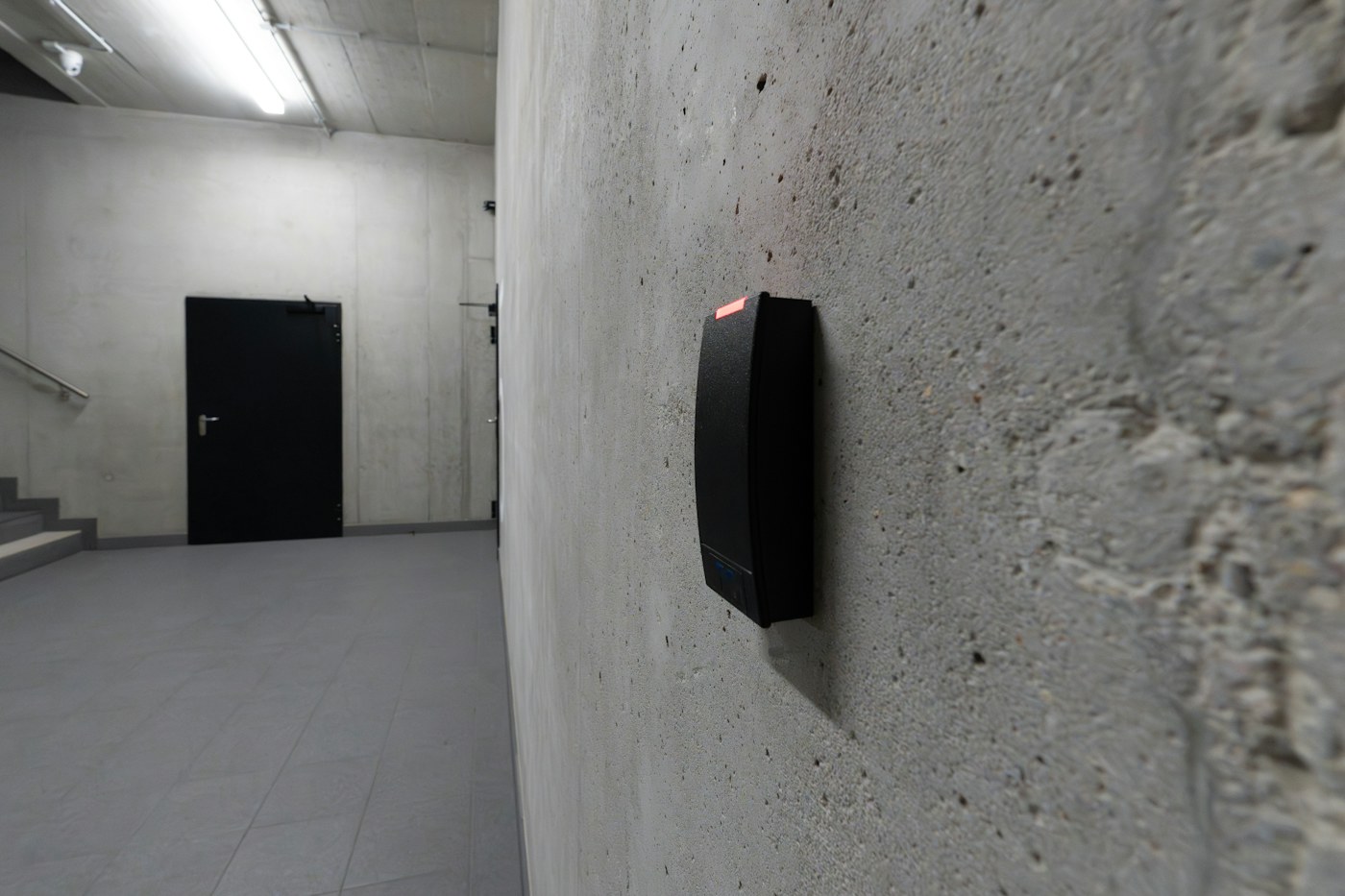
Give every opening a stable identity
Record the building and door number, primary users, occupancy, emergency-route function, current hardware, handing, frame material, fire rating and known defects. Capture both sides of the door and any existing keying, locks, panic hardware, transfer wiring, operators, contacts and network or power routes. At a pair of doors, document both leaves and required egress.
Confirm closing, latching and hardware suitability
Test the physical door before introducing electronics. Misalignment, damaged hinges, inadequate closer force, latch preload, warped frames and air-pressure differences can cause intermittent failures. Decide whether a listed electric strike, electrified lockset, electrified exit trim, latch-retraction device or other arrangement is suitable for that opening. Do not select a magnetic lock as a universal fix for difficult doors.
Define entry and egress separately
State who may enter using a card, phone, fob, PIN or other supported credential. Separately identify required inside exit behavior. Fail-safe and fail-secure describe the particular device’s response to power loss, not the entire egress sequence. Approved release, fire-alarm coordination, rated-door latching and accessibility must be evaluated for the actual opening and jurisdiction.
Choose monitoring that answers useful questions
A door-position contact can report open or closed state; it does not necessarily prove latching. Request-to-exit and lock-monitoring devices have different functions. Define which events should be recorded, the held-open delay, and who responds to forced-door or tamper alerts. Verify corresponding video where it is needed for investigations.
Power and reader communications
Calculate lock load including inrush, cable length, voltage drop, controller and reader needs. Confirm backup power and emergency behavior using manufacturer’s documentation. Distinguish readers using Wiegand, OSDP with properly configured Secure Channel, or IP interfaces. Reader-to-controller security is a separate choice from whether a card or mobile credential is encrypted.
Automatic operators and accessible doors
At an accessible entrance, define the sequence of credential presentation, lock release, door operation, timing, passage and relocking. Test it with the actual operator and traffic path. A reader’s acceptance signal does not prove the opening is accessible or that the lock and operator have been coordinated correctly.
Special opening types
Aluminum storefront doors, fire-rated hollow-metal assemblies, historic wood doors, glass, exterior gates, loading entrances and wireless interior locks each raise different mounting, retrofit and service questions. Gate safety and vehicle traffic need separate operator and entrapment-protection review; access authorization is not the safety system.
Commission door by door
- Check the mechanical assembly first.
- Verify valid and invalid access, then inside egress.
- Test requested monitoring and events against actual door movement.
- Test schedules, power and communications interruption safely.
- Test required emergency interfaces under an approved procedure with responsible personnel.
- Record deficiencies, retests, wiring, equipment models and administrator handover.
For equipment families, see the door hardware reference. For system modernization, consult the upgrade and takeover guide. Always verify applicable requirements, listings and manufacturer instructions before modifying an opening.
Publisher’s related applied reference: commercial door hardware retrofit planning.